
In This Guide
- Why most nutrition plans fail teen athletes (and their parents)
- What a teen athlete actually needs in a week
- The 5-part weekly nutrition system
- A full sample week broken down day by day
- What to do when life gets in the way
- The late bloomer problem nobody talks about
- How to build the plan your teen will actually follow
- Free 1-week meal plan download
The Night I Threw Out Every Nutrition Article I’d Ever Read
I remember standing in the kitchen on a Tuesday night, staring at a printed-out “athlete meal plan” I’d found online. Seven days of perfectly portioned meals. Macros calculated to two decimal places. Color-coded by food group.
My son Liam had soccer practice in forty minutes. He’d just gotten home from school, dumped his backpack on the floor, and was standing in front of the open fridge looking like he might fall asleep standing up. He hadn’t eaten since lunch, a cafeteria meal that may or may not have contained any actual nutrition.
That printed plan was useless to me in that moment. It assumed a world where I meal-prepped on Sundays, my teen athlete had a consistent appetite, and nothing ever ran late. It was written for someone with time, energy, and a teenager who would cheerfully eat a quinoa bowl after five hours of school.
I gave Liam a banana, some pretzels, and a glass of milk. He ate it standing up. He made it to practice. And I went back to the kitchen and started building something that actually worked for our life.
This article is that something. It’s not a perfect plan. It’s a real one, built for school nights, tired parents, picky eaters, and teen athletes who are doing the hard work of growing and competing at the same time.
A nutrition plan for teen athletes doesn’t need to be complicated to work. It needs to be consistent. There’s a big difference.
This teenage athlete meal plan is designed to take the guesswork out of feeding your sports kid every single day of the week
Why Most Nutrition Plans Fail Teen Athletes
Most nutrition plans written for teen athletes are actually written for adult athletes and scaled down. Or they’re written for professional athletes and translated into family-friendly language. Neither approach works, for one simple reason:
A teenage athlete is not a small adult. They’re a growing human being who is simultaneously building bone, developing muscle, going through hormonal changes, managing academic pressure, and training hard, often multiple days a week. The nutritional demands of that combination are unique. A plan that ignores the “growing” part will always fall short on the “performing” part.
The second reason most plans fail is practical: they’re built for ideal conditions. They assume consistent meal times, a fully stocked kitchen, a teen who eats willingly, and a parent with time to cook. Real sports families have none of that, at least not all the time.
What actually works is a system, not a schedule. The difference:
A schedule says: Monday is pasta, Tuesday is rice bowl, Wednesday is salmon.
A system says: every meal has a carb base, a protein, and something colorful and here’s how to build that in five minutes with whatever’s in the fridge.
What a Teenage Athlete Meal Plan Actually Covers Each Week
Before we get into the plan itself, it helps to understand the weekly nutritional picture. Not in grams or calories, in principles. These are the things that have to show up consistently across the week for a teen athlete to perform well, recover properly, and keep up with the demands of both sport and school.
Carbohydrates every single day. This is the one that surprises most parents. Carbs aren’t a sometimes food for teen athletes, they’re the primary fuel source for every sprint, every jump, every training session. Cutting carbs or treating them as a reward is one of the fastest ways to tank a teen athlete’s performance. The plate should be half carbohydrates at every main meal, more on heavy training days.
Protein spread across the day, not loaded at dinner. The research on this is clear: muscle repair happens most effectively when protein is distributed across multiple meals and snacks rather than eaten in one large serving. A teen who skips breakfast, eats a light lunch, and then has a large protein dinner at 8pm is not getting the recovery benefit. Protein at breakfast matters as much as protein after practice.
Hydration that starts in the morning. By the time your teen feels thirsty at practice, they’re already behind. Hydration is a day-long effort, not a pre-practice chug. A water bottle at school, refilled twice before practice, is worth more than any sports drink on the bench.
A real breakfast, not a skipped one. Liam used to skip breakfast most school days. He thought he wasn’t hungry. What was actually happening was that his body had been in an overnight fast for nine or ten hours, his blood sugar was low, and he was about to spend six hours at school before a two-hour practice. Starting that chain with nothing is a recipe for afternoon crashes, low energy at practice, and slow recovery overnight.
Recovery nutrition after every session. This is the most skipped step in youth athlete nutrition and the one that makes the biggest difference week over week. Carbs plus protein in the first thirty minutes after practice, something as simple as chocolate milk and a banana, starts the recovery process that determines how your teen feels at the next session.
Sleep, eight to ten hours. No nutrition plan compensates for chronic sleep deprivation. Growth hormone is released during sleep. Muscle repair happens during sleep. Memory consolidation, which includes motor learning for athletic skills, happens during sleep. Protecting sleep is part of the nutrition plan..
The 5-Part Weekly Nutrition System
Use this teenage athlete meal plan as your weekly starting point and adjust based on your teen’s sport and schedule.
Instead of a rigid seven-day meal plan, here is the system I use. It has five components. Each one is simple. Together they cover everything a teen athlete needs across a full week.
Component 1: The Performance Plate (every main meal)
Every main meal: breakfast, lunch, dinner, follows the same basic structure:
- Half the plate is carbohydrates: rice, pasta, potatoes, oats, bread, fruit, corn
- A quarter of the plate is lean protein: eggs, chicken, turkey, fish, tofu, beans, Greek yogurt
- A quarter of the plate is colour: vegetables and fruit for vitamins, minerals, and recovery
- A small amount of healthy fat: olive oil, avocado, cheese, nuts or seeds
On heavy training days, nudge the plate toward more carbohydrates. On rest days, dial it back slightly and lean into vegetables and healthy fats. The structure stays the same, the proportions adjust.
Component 2: The Two Snack Slots
Teen athletes need two snack moments built into every school day, not optional, not based on whether they feel hungry.
Snack 1: Afternoon balanced snack (P1-3, 1-3 hours before practice): Carb plus protein. Yogurt and granola. Turkey on a small roll. Peanut butter and crackers. This is the bridge between school lunch and practice, and it’s the most commonly missed meal in a teen athlete’s day.
Snack 2: Pre-practice top-up (P30, 30-60 minutes before): Quick carb only. Banana, applesauce pouch, fig bar, pretzels. Small, easy to digest, familiar. This is not a meal, it’s a top-off.
Component 3: The Recovery Pair
Within thirty minutes of every practice or game ending, your teen needs carbs plus protein. Choose a default pair and make it automatic:
- Chocolate milk (12-16 oz) + banana
- Greek yogurt + granola + fruit
- Turkey sandwich half + water
- Smoothie with milk, yogurt, and fruit
Component 4: The Bottle Rule
One labelled water bottle. Filled twice before practice. That’s it. Pale yellow urine is the daily target. This single habit, done consistently, solves most of the dehydration issues that show up as fatigue, headaches, and poor second-half performance.
Sports drinks are reserved for sessions longer than sixty to seventy-five minutes, very hot conditions, or back-to-back games. Water is the default.
Component 5: The Weekend Reset
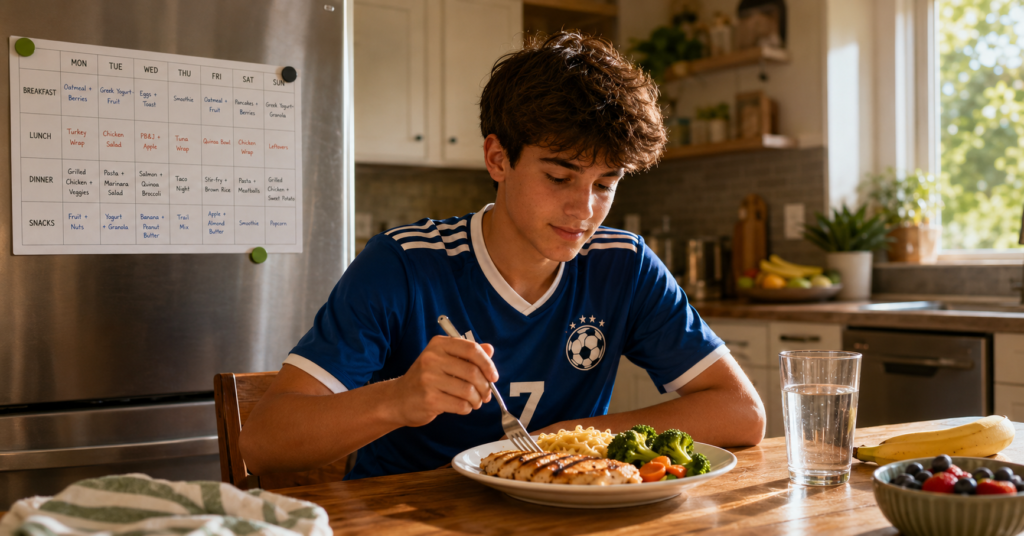
Sunday is prep day. Fifteen minutes, not two hours. Restock the snack supply, applesauce pouches, granola bars, bananas, pretzels, cheese sticks. Fill the water bottle. Choose two breakfasts and two dinners you’ll rotate through the week. Write them on the fridge. That’s the whole reset.
A Full Sample Week: Day by Day
This sample week assumes three practice days (Monday, Wednesday, Thursday), one game day (Saturday), and rest days on Tuesday, Friday, and Sunday. Adjust the practice and game days to match your teen’s schedule, the structure stays the same.
Monday: Practice Day
Breakfast (7:00am): Oats cooked with milk + banana + drizzle of honey + glass of water. Quick, familiar, and carbohydrate-forward to fuel the school day.
School lunch: Packed or cafeteria, aim for the performance plate. Rice or pasta base + protein + fruit or veg + water.
Afternoon snack (2:30pm, P1-3): Greek yogurt + granola + grapes. Carb and protein hit to bridge the school-to-practice gap.
Pre-practice snack (3:30pm, P30): Banana + a few sips of water. Nothing heavy.
Recovery snack (5:30pm, POST30): Chocolate milk + pretzels in the car on the way home.
Dinner (7:00pm): Rice bowl + grilled chicken + steamed broccoli + fruit + water. This is the full recovery meal, carbs to refill, protein to repair, colour to support immunity and gut health.
Tuesday: Rest Day
Breakfast: Eggs + wholegrain toast + sliced fruit + water. Protein at breakfast anchors energy for the school day.
Lunch: Turkey and cheese sandwich + apple + carrots + water.
Afternoon snack: Cheese stick + pretzels + fruit. Light and balanced, no practice to fuel for.
Dinner: Pasta with tomato sauce + meatballs or white beans + side salad + water. Dial the carbs back slightly compared to a practice day, but don’t cut them.
Wednesday: Practice Day
Breakfast: Smoothie (milk + banana + frozen berries + Greek yogurt) + a slice of peanut butter toast. Fast, portable, and packed with both carbs and protein.
Lunch: Cafeteria or packed, performance plate format. Aim for a carb base + protein + fruit.
Afternoon snack (2:15pm, P1-3): Hummus + mini pita + grapes. Satisfying without being heavy.
Pre-practice snack (3:15pm, P30): Applesauce pouch + 6 pretzels + water.
Recovery snack (POST30): Drinkable yogurt + banana.
Dinner: Burrito bowl, white rice + black beans + grilled chicken + salsa + small amount of guacamole + water. This is Liam’s weekly favourite and it covers every nutritional base.
Thursday: Practice Day
Breakfast: Overnight oats (made Tuesday night, oats, milk, chia seeds, banana, honey) + water. Zero morning effort.
Lunch: Leftovers from Wednesday dinner or packed wrap + fruit + water.
Afternoon snack (P1-3): Tuna pouch + crackers + orange. Simple, high protein, portable.
Pre-practice snack (P30): Fig bar + sips of water.
Recovery snack (POST30): String cheese + pretzels + apple + water.
Dinner: Baked salmon or chicken thighs + roasted potatoes + cooked green beans + water. Potatoes are underrated as an athlete carb, easy to digest, satisfying, and versatile.
Friday: School Day + Light Activity
Breakfast: Eggs scrambled + wholegrain toast + banana + water. Friday breakfast is about setting up a good weekend, not just getting through the school day.
Lunch: Packed or cafeteria. Encourage the full plate, this is the pre-game day, even if the game is Saturday.
Afternoon snack: Granola bar + piece of fruit + water. Low-key day, low-key snack.
Dinner: Pasta + meat sauce + garlic bread + side salad + water. This is the pre-game meal. Friday dinner is one of the most important meals of the week for a Saturday game, carb-forward, familiar, lower in fat. No new foods, no heavy sauces, nothing their stomach isn’t used to.
Saturday: Game Day
Breakfast (3-4 hours before game): Oats + milk + banana + two eggs + water. The game day breakfast follows the performance plate, carb-forward, moderate protein, light on fat and fibre.
Pre-game snack (30-60 min before, P30): Banana or applesauce pouch + sips of water. Nothing new, nothing heavy.
During the game (DUR): Small sips of water every 15 minutes. If the game is long or it’s hot, add a sports drink or electrolyte tabs.
Post-game recovery (POST30): Chocolate milk + banana in the car. Start the recovery clock immediately, don’t wait until you get home.
Post-game dinner: Their choice, within reason. After a full game and a proper recovery snack, dinner can be more relaxed. If they want the burger, they’ve earned it. Just make sure there’s water and a piece of fruit somewhere in the meal.
Sunday: Reset Day
Breakfast: Whatever they want. Weekend breakfast is a low-pressure meal. Pancakes, eggs, avocado toast, the structure matters less on a full rest day.
Lunch: Normal balanced plate. Leftovers work well here.
Afternoon: 15-minute prep. Restock snacks. Make overnight oats for Thursday. Choose this week’s two breakfasts and write them on the fridge.
Dinner: Family meal, the performance plate structure without the game-day pressure. This is the night to try a new recipe if you want to.
The Late Bloomer Problem Nobody Talks About
Liam was a late bloomer. At fifteen, he was still physically smaller than most of his teammates, still waiting for the growth spurt that some of them had gone through at thirteen. He worked twice as hard to keep up, and he was falling behind anyway. His coach thought his body just couldn’t handle the full ninety minutes.
What I’ve learned since then is that late-maturing teen athletes are in a particularly vulnerable position nutritionally. Their bodies are doing the work of growth and athletic performance simultaneously, on a delayed timeline, while competing against peers who’ve already completed that developmental leap. The fuel needs are real and often underestimated.
Three things matter most for late bloomers specifically:
Consistent calories. Under-fuelling in adolescence during a growth phase doesn’t just affect performance, it can affect growth itself. A late bloomer who is chronically under-fuelled may be inadvertently slowing down the development they’re waiting for.
Calcium and vitamin D. Bone development in teenagers happens in intensive bursts. Dairy, fortified plant milks, canned fish with bones, and tofu set with calcium are all good sources. Vitamin D comes from fortified dairy, eggs, salmon, and safe sun exposure.
Iron. Rapid growth phases increase iron needs significantly. Low iron shows up as fatigue, poor concentration, and physical underperformance, all things that can get misread as a motivation or fitness problem. Lean red meat, poultry, fortified cereals, and beans are key sources. Pair plant-based iron with vitamin C (citrus, berries, peppers) to improve absorption.
What to Do When Life Gets in the Way
This section exists because real life is not a sample week. It’s late meetings and traffic and the days when dinner is forty-five minutes late and your teen is already at practice and you forgot to pack the afternoon snack.
Forgot the afternoon snack: Keep a permanent car kit, applesauce pouches, a granola bar, mini pretzels, and a spare water bottle. These live in the car and never get moved. They’ve saved us more times than I can count.
No time for a proper dinner before a game: Drive-through isn’t the end of the world. A grilled chicken sandwich, a side of fruit if available, and a water covers the basics. Skip the fries right before game time, high fat slows digestion. Keep it simple.
Teen refuses to eat before practice: Don’t force it. Offer something liquid instead, a drinkable yogurt, a smoothie, chocolate milk. Liquid calories digest faster and are easier to manage on a nervous or reluctant stomach. Something is always better than nothing.
Practice ends late and dinner is at 9pm: Use the recovery snack window (POST30) immediately after practice, chocolate milk, a banana, pretzels, and then have a lighter dinner. Don’t skip the recovery snack just because dinner is coming. The thirty-minute window after activity is when it matters most.
Tournament weekend with no kitchen: Pack a cooler. Turkey wraps, yogurt cups, cheese sticks, fruit, bananas, applesauce pouches, electrolyte tabs for hot days, chocolate milk for recovery. The concession stand is fine for one item, but not as the main fuel strategy across three games.
How to Build the Plan Your Teen Will Actually Follow
The best nutrition plan is the one your teen will do consistently. That requires two things: familiarity and ownership.
Start with what they already eat. Don’t overhaul everything at once. Look at what your teen already eats and likes, and build the performance plate around those foods. If they love pasta, pasta becomes the carb base. If they’ll eat chicken but not fish, chicken is the protein. The structure matters more than the specific foods.
Give them choices, not instructions.“Do you want a banana or an applesauce before practice?” is more effective than “You need to eat something before practice.” Autonomy matters to teenagers. A plan they feel ownership over is a plan they’ll follow.
Practice the game-day routine on training days. The P30 snack, the recovery pair, the hydration habit, all of these should be practiced and normalised on regular training days before they’re needed on game day. Routine reduces the mental load for both of you.
Track one thing at a time. Don’t try to implement the full system in week one. Start with the recovery snack, just that one habit, every session, for two weeks. Once that’s automatic, add the bottle rule. Once that’s automatic, work on the afternoon snack slot. Small wins stack into big changes.
Notice the results out loud. When Liam started recovering faster and his second-half energy improved, I told him I’d noticed. When his coach commented, I made sure Liam heard it. Teenagers are more motivated by visible results than by the idea of future health. Connect the habit to the outcome they actually care about.
The Five Most Common Nutrition Mistakes Teen Athletes Make
- Avoiding carbs because they heard they’re bad. Carbohydrates are the primary fuel for high-intensity sport. Cutting them to “eat cleaner” or “lose weight” directly harms athletic performance. This is the single most common mistake I see.
- Front-loading protein before games. Liam’s mistake. Large protein servings right before play sit heavy, slow digestion, and don’t fuel the sprinting muscles that need carbohydrate. Pre-game protein should be moderate, the focus is carbs.
- Skipping the afternoon snack slot. The gap between school lunch and 4pm practice is three to four hours. That’s a long time without fuel for a growing body that’s about to do two hours of high-intensity work. The afternoon snack is not optional.
- Drinking energy drinks instead of water. Energy drinks are not a performance tool for teen athletes. The caffeine spikes anxiety, the sugar creates a blood glucose crash, and the diuretic effect makes dehydration worse. Water and real food do the job better.
- Skipping the recovery window. “I’ll just wait for dinner”, said after a 5pm practice that ends at 7pm, with dinner at 8:30. That’s a three-and-a-half-hour gap where the muscles are waiting for the signal to start repairing. The recovery snack exists to bridge that gap. It takes thirty seconds to hand someone a chocolate milk.
What Changed for Liam, and What Will Change for Your Teen
We didn’t flip a switch. It happened gradually, over about six weeks of consistent habits. The overnight oats became normal. The car kit was always stocked. The chocolate milk in the backseat after practice became the ritual Liam actually looked forward to.
The changes were quiet. Fewer headaches after sessions. Better moods on heavy training weeks. Less asking for the couch the moment he got home. And then, around the fifth week, his coach pulled me aside again, this time to tell me that Liam’s energy in the second half had become one of the most consistent on the team.
That was everything.
Your teen’s situation is different from Liam’s. Their sport is different, their schedule is different, their food preferences are different. But the underlying biology is the same. Carbs fuel the work. Protein repairs the muscle. Hydration keeps the systems running. Sleep completes the recovery. Consistency across the week beats perfection on any single day.
Start with one thing. The recovery snack is usually the easiest entry point. Then add the next. You don’t need a perfect week, you need a repeatable one.
Quick Reference: The Weekly Nutrition Plan at a Glance
Every main meal: ½ carbs + ¼ protein + ¼ colour + small healthy fat + water
Practice day snack 1 (P1-3): Balanced; carb + protein (yogurt + granola, turkey wrap, hummus + pita)
Practice day snack 2 (P30): Quick carb only; banana, applesauce, fig bar, pretzels
Recovery (POST30): Carb + protein within 30 minutes; chocolate milk + banana is the default
Hydration: One bottle, filled twice before practice, pale yellow urine is the target
Game day: Familiar carb-forward meal 3-4 hours before, P30 top-up, sips during, recovery pair after
Sleep: 8-10 hours, not optional, this is part of the nutrition plan
Sunday reset: 15 minutes, restock snacks, choose 2 breakfasts + 2 dinners for the week, write on the fridge
Ready to Put This Into Practice?
The free 1-week meal plan at Raising Strong Athletes takes everything in this article and maps it out day by day, including training days, rest days, and a full game-day schedule you can print and stick on the fridge. No guesswork, no planning required.
And if you want the complete system, the timing framework, 100 snack ideas, hydration targets, recovery habits, tournament planning, and allergy-friendly swaps all in one place, the Raising Strong Athletes ebook was built exactly for families like yours.

Maya Bennett is a youth sports parent and nutrition
advocate with over 8 years of experience supporting
teen athletes. After helping her own son overcome
chronic fatigue and performance struggles through
better fueling habits, she founded Raising Strong
Athletes to give other parents the practical,
science-backed roadmap she wished she’d had.
Maya’s content is grounded in established sports
nutrition research and real-world family experience.