
If you’re a sports parent, you already know the feeling: your teen has a game tomorrow, you’re staring into the fridge at 6pm, and you have no idea if what you’re about to make is actually going to help or hurt their performance.
I’ve been there. When my son was substituted out in the second half of a soccer game, the coach told me he just didn’t have the energy. I realized I had been guessing at nutrition his entire athletic career. That one moment changed everything for our family.
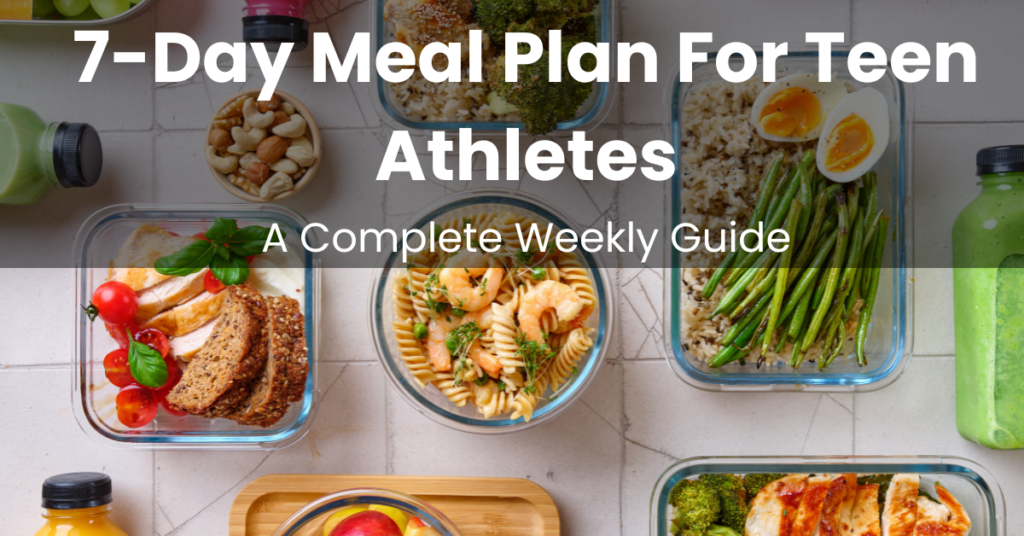
This 7-day meal plan for teen athletes takes the guesswork out completely. It’s built around real food, real schedules, and the science of what a growing athlete’s body actually needs, not just on game day, but every single day of the week.
This 7-day meal plan for teenage athletes works whether your kid plays soccer, basketball, or runs track.
Want this as a printable PDF?
Grab the free, printable 7-Day Meal Plan for Teen Athletes, made to stick on the fridge or pull up on your phone at the grocery store.
Why Teen Athletes Need a Structured Meal Plan
Most parents think about nutrition only on game day. But here’s what the research shows: what your teen eats from Monday through Friday determines how much energy they have on Saturday. You can’t fuel a performance with one good pre-game meal if the rest of the week is inconsistent.
Teen athletes have significantly higher caloric and nutrient needs than non-active teens. They need:
• Consistent carbohydrates to fuel training sessions and maintain glycogen stores
• Adequate protein to repair and build muscle after every practice
• Healthy fats to support hormone production and joint health
• Micronutrients, especially iron, calcium, and vitamin D, that are commonly depleted in active teens
• Proper hydration starting the night before, not just the morning of a game
A structured weekly meal plan solves all of these at once, without requiring you to think about it from scratch every day.
What a Balanced Meal Plan for a Teen Athlete Actually Looks Like
Before
we get into the full week, let’s talk about the plate formula that drives this
plan. Every main meal should follow what I call the Performance Plate:
|
50% Carbs |
25% Protein |
25% Veggies + Fats |
|
Rice, pasta, oats, sweet potato, whole grain bread |
Chicken, eggs, turkey, tuna, Greek yogurt, beans |
Broccoli, spinach, peppers, avocado, olive oil, nuts |
Simple. Repeatable. And flexible enough to work with whatever your teen will actually eat.
The Complete 7-Day Meal Plan for Teenage Athletes
This plan is designed for a teen athlete with daily practice or training. On rest
days, reduce portion sizes slightly, especially carbohydrates. On game days,
follow the game day fuel notes included in each day.
This 7-day meal plan for teen athletes is designed to keep energy consistent from Monday through Sunday
Day | Breakfast | Lunch | Snack | Dinner |
Monday | Oatmeal + banana + boiled eggs (×2) | Grilled chicken wrap + side salad | Apple + peanut butter | Rice + baked salmon + broccoli + olive oil drizzle |
Tuesday | Scrambled eggs + whole grain toast + OJ | Turkey & cheese sandwich + baby carrots | Greek yogurt + berries | Pasta + ground turkey bolognese + side veggies |
Wednesday (Game Day) | Oatmeal + honey + banana, eaten 3 hrs before game | Light: rice + chicken + mixed veggies, 3 hrs before | Banana or rice cakes 60 min before game | Recovery: chicken + sweet potato + spinach salad |
Thursday | Greek yogurt parfait + granola + fruit | Tuna salad on whole grain bread + cucumber | Cheese stick + whole grain crackers | Stir-fry chicken + brown rice + mixed veggies |
Friday | Banana pancakes (oats + egg + banana) + maple syrup | Grilled chicken Caesar salad + whole grain roll | Hummus + veggie sticks | Baked chicken thighs + quinoa + roasted sweet potato |
Saturday (Rest Day) | Veggie omelette + whole grain toast | Bean & cheese quesadilla + salsa + sour cream | Trail mix (nuts + dried fruit) | Homemade burgers + sweet potato fries + salad |
Sunday | Whole grain waffles + Greek yogurt + berries | Leftover chicken + rice bowl + avocado | Smoothie: banana + spinach + protein powder + milk | Pasta + grilled chicken + tomato sauce + garlic bread |
Although it’s built for teenage athletes, you can scale it down for younger or child athletes by reducing portions, the structure stays the same.
Want this as a printable PDF?
Grab the free, printable 7-Day Meal Plan for Teen Athletes, made to stick on the fridge or pull up on your phone at the grocery store.
Adjusting the Plan for Teenage Girl Athletes
Teenage girl athletes have a few needs worth extra attention. Iron is the big one, iron deficiency is far more common in female athletes and shows up as fatigue, breathlessness, and slow recovery long before a blood test catches it. Build in iron-rich foods (lean red meat, beans, lentils, spinach, fortified cereals) and pair them with vitamin C (peppers, citrus, strawberries) to boost absorption; keep them separate from large amounts of dairy, which can blunt it.
Calcium and vitamin D matter too: the teen years are when girls build the bone density that protects against stress fractures later. And the most important principle: girl athletes need enough food. Under-fueling is common and harmful, affecting energy, mood, periods, and bone health. The goal is always consistent, adequate fuel, never restriction.
Game Day Nutrition: What to Do Differently
Game day is where this plan really earns its keep. Here’s the timing that changed everything for my son:
3 Hours Before the Game
This is the most important meal of the day. You want a full, balanced meal that gives the body time to digest properly. Think: rice or pasta, a lean protein like grilled chicken, and mixed vegetables. Keep fat and fiber moderate, too much slows digestion.
This is exactly what I started making my son: rice, chicken, and mixed veggies three hours before kickoff. Within weeks, his coach was commenting on the change in his energy levels.
That pre-game meal is worth getting right every single time, I walk through exactly what to serve, what to avoid, and how the timing shifts for early vs. evening games in my full guide to pre-game meals for teen athletes.
60–90 Minutes Before
This is snack territory only. A banana, a handful of rice cakes, or a small granola bar. The goal is topping off energy stores without sitting heavy in the stomach.
During the Game
Water every 15–20 minutes. If the game is longer than 90 minutes or played in heat, add an electrolyte drink or orange slices at halftime. No energy drinks, ever.
The Night Before
This is what most parents miss completely. Hydration starts the night before, not the morning of. Have your teen drink an extra glass or two of water the evening before a game. A carb-rich dinner, pasta, rice, or sweet potatoes, helps stock up glycogen so the body has fuel ready to go.
Hydration: The Part Most Teen Athletes Get Wrong
In my experience talking with other sports parents, hydration is the single most underestimated factor in teen athlete performance. A teen who is even mildly dehydrated, as little as 2% body weight, will experience measurable drops in strength, speed, and focus.
Here’s a simple daily hydration guide:
- Morning: 1–2 glasses of water before breakfast
- Throughout the school day: aim for 6–8 cups total
- Pre-practice/game: 16 oz (500ml) about 2 hours before
- During activity: 6–8 oz every 15–20 minutes
- Post-activity: 16–24 oz to rehydrate within 30 minutes
One practical tip: send your teen to school with a large water bottle and a simple goal, finish it before lunch. That one habit alone makes a measurable difference.
If hydration is a constant battle in your house, I go much deeper there, daily timing, when electrolytes actually help, and the early signs of dehydration most parents miss, in my complete hydration guide for teen athletes.
Add Your Snacks That Actually Support Athletic Performance
Between meals, the right snacks keep energy stable and prevent the afternoon crash that hits so many teens right before practice. Here are the best options that teen athletes will actually eat:
- Before practice: Greek yogurt + granola
- Before practice: Banana + peanut butter
- Before practice: Rice cakes + almond butter
- After practice: Chocolate milk (one of the best recovery drinks available)
- After practice: Eggs + whole grain toast
- After practice: Smoothie: banana, spinach, Greek yogurt, milk
- Between school and practice: Apple + string cheese
- Between school and practice: Trail mix with nuts and dried fruit
For the full list, see my guide to healthy snacks for teen athletes.
Weekly Meal Prep Tips for Busy Sports Parents
I know what you’re thinking: this looks great, but I don’t have time to cook from scratch every night. That’s why meal prep on Sunday is the game-changer for sports families.
Here’s a simple Sunday routine that takes about 90 minutes and sets you up for the whole week:
- Cook a large batch of rice or pasta
- Grill or bake 4–5 chicken breasts and portion into containers
- Wash and cut vegetables for snacks and sides
- Hard-boil a dozen eggs
- Portion out snacks (trail mix, yogurt cups, fruit) into grab-and-go containers
With those five things done, most of your meals this week are just assembly, not cooking. That’s what makes this sustainable for real sports families.
The Teen Athlete Nutrition Ebook goes deeper on everything in this guide, including portion sizes by sport and age, a complete guide for teens, and a printable weekly meal planner.
Available at RaisingStrongAthletes
use WELCOME20 for 20% off your first order.
Frequently Asked Questions
How many calories does a teen athlete need per day?
This depends on age, sport, and training intensity, but most active teen athletes need between 2,500 and 3,500 calories per day, significantly more than the average sedentary teen. Female athletes typically need 2,200–2,800. If your teen is constantly tired or not recovering well, calories are often the first thing to look at. Following a structured 7-day meal plan for teen athletes ensures those calorie needs are met consistently.
What should a teen athlete eat the morning of a game?
The best game day breakfast is eaten 2.5–3 hours before game time. Oatmeal with a banana and a protein source like eggs or Greek yogurt is a reliable choice. Avoid anything too fatty, too spicy, or completely new, game day is not the time to experiment with food.
Can teen athletes eat fast food?
Occasionally, yes, and without guilt. The key is making good choices when you’re at a fast food restaurant. Grilled options over fried, water or milk over soda, and adding fruit or a side salad when available. It’s the consistent daily meals that drive performance, not the occasional exception.
Should teen athletes take protein supplements?
For most teen athletes, protein needs can be met through whole food sources without supplements. If your teen genuinely struggles to eat enough protein, which can happen with very heavy training schedules, a simple whey or plant-based protein powder added to a smoothie is a reasonable option. Always consult with your teen’s doctor before adding supplements.
How do I get my picky teen to eat better?
Start with what they already like and build from there. If your teen loves pasta, make it the base and add protein and vegetables. If they love sandwiches, use whole grain bread and quality fillings. Small, consistent upgrades beat dramatic dietary overhauls every time. And involve them in the shopping and meal prep, teens are much more likely to eat food they helped choose or make.
What is the best post-game meal for a teen athlete?
Within 30–60 minutes after a game or intense practice, aim for a meal or snack that combines protein and carbohydrates. Chocolate milk is one of the most convenient and effective recovery options. A more complete recovery meal, grilled chicken, sweet potato, and a salad, is ideal within 2 hours. Recovery goes beyond that first meal, though. For the full routine, sleep, rehydration, and what to do on back-to-back game days, here’s my guide to post-game recovery for teen athletes.
How much protein does a teen athlete need?
Most teen athletes need roughly 1.2–1.6 grams of protein per kilogram of body weight daily, more than a sedentary teen, but very doable through food. Spread it across the day (20–30g per meal) rather than loading it all at dinner.
The Bottom Line
A structured, balanced meal plan is one of the highest-leverage things you can do for your teen athlete’s performance. Not a magic supplement. Not a new pair of cleats. Food, eaten consistently, at the right times, with the right balance.
After three months of following a plan like this one, my son’s coach pulled me aside and said: “I can’t recognize him anymore. His energy level has improved drastically.” My son became more confident on the field, and I became a more confident sports mom in the kitchen.
You can do the same. Start with this plan this week, even if you only nail three days out of seven. Progress beats perfection every time.
This 7-day meal plan for teen athletes is the starting point that changed everything for my son.
Ready to take it further? The Game Day Fuel Toolkit and Teen Athlete Nutrition Ebook are the exact resources I wish I had when my son was first struggling.
Visit RaisingStrongAthletes
use code WELCOME20 for 20% off

Maya Bennett is a youth sports parent and nutrition
advocate with over 8 years of experience supporting
teen athletes. After helping her own son overcome
chronic fatigue and performance struggles through
better fueling habits, she founded Raising Strong
Athletes to give other parents the practical,
science-backed roadmap she wished she’d had.
Maya’s content is grounded in established sports
nutrition research and real-world family experience.